About
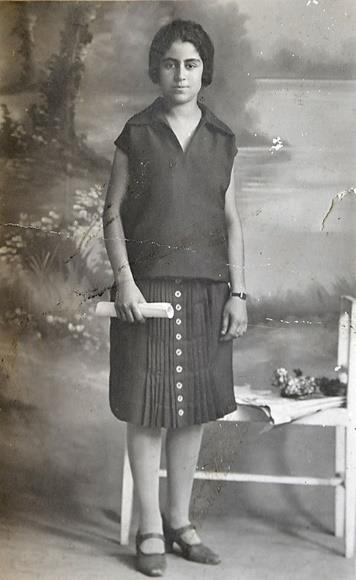
Rina and Sol started this book as a way of preserving, sharing and handing down family recipes, particularly those learned from our mother, Rachel. She only became a housewife after she came to England in 1947, as a refugee, with Sol and Mike in tow. Having had to leave Aleppo, they were lucky that father Mrad had already gone to Manchester, and managed to get them into the country “temporarily”, on his Italian passport. The family gradually settled and eventually got British nationality.
Rachel was born in 1918, and grew up in the beautiful port city of Haifa, in Palestine, then under British rule. Her family was Sephardic and Mizrahi Jewish, but lived in the old city near the beach and the port. She recalled that they had Arab Muslim neighbours, who would keep their food warm for them on the sabbath and holidays, when fires could not be lit under Jewish rules. She spoke Arabic and Hebrew at home, and learned French at school, but her father (who we met in 1952 when we went back with her on a visit to her family) spoke only Arabic and Hebrew.
She went to a school that was part of the Alliance Israélite Universelle, which set up a network of non-religious but Jewish schools in the Mediterranean and the Middle East. She did so well there that she was one of the few sent to its headquarters in Paris to finish her secondary education, and she got a teaching diploma. When she applied for a job with the Alliance, she was sent to their school in Aleppo to teach French. The school’s head arranged that she could board with the Picciotto family. Mrad was the second of the five sons and two daughters, and he was the one who managed to win Rachel’s affections, to the chagrin of his younger brother Armand.
Rachel was a teacher, and the Picciotto family had a cook, so arriving in England she had to adapt. She took lessons in Middle Eastern cooking from a well-known skilled cook in the Sephardi community in south Manchester, Mrs Adess. She soon became a great and inventive cook, mainly of Middle Eastern recipes, which were an important part of our childhood. Dinner was a main point of the day, when the family all came together, regularly around 6.30 p.m. On weekends and special occasions, Mrad liked a pre-dinner drink of whisky with a lot of soda, and we would have nuts, olives and maybe other mezzes.
She complained that Mrad took her cooking for granted, probably because he was used to it, and he was fussy – he claimed to not like garlic, but she used it anyway and told him she’d left it out. But she also indulged him sometimes, by making a brain salad which he was fond of, and nobody else liked. She appreciated that her children loved her food, which wasn’t surprising compared with the bland British food of the time (though we also loved chips, which she made in a deep-fat fryer, never enough for us). Rachel never forced children to eat – she didn’t have to. She said that children were allowed to say they did not like one dish, but otherwise had to try everything, a handy tip for parents. Rina had nothing else until she started at school, so couldn’t believe that the school dinners were actually food, and once threw up after a particularly congealed mess was served.
Rachel did not teach Sol, Mike or Rina to cook, before they went off to university. Our job, once we were teenagers, was to wash up and clean the kitchen after dinner. Sol did ask for a recipe so he could try for his Cook’s Badge in boy scouts, but it didn’t go too well. He got from her the basics of what she called Riz à la Valenciennes, a kind of pilaff, but either she didn’t explain, or he didn’t remember, that it needs cooked rice! She cooked by habit and instinct, and didn’t always tell you all the ingredients or steps in a recipe, you had to do it with her to learn how.
Claudia Roden’s wonderful book Middle Eastern Food came out in 1968 (the year Anna was born), and helped us to realise that we were part of a wider tradition. As she explains, this type of food is found all across the Middle East and north Africa, what was formerly the Ottoman empire, and was common to all the different ethnic and religious communities. Rachel and Mrad were Arab Jews, they also enjoyed Arabic music: Mrad could even play a bit on the piano, which he did with newspaper behind the keys to make it sound like an oudh (Arab guitar). They were also francophone, and Rachel would have liked to go back to teaching French once her children grew up, but it wasn’t possible.
The photo on the cover page shows Rachel at the Cannon gas stove she had for many years – Sol and Catherine also got one in Leamington. It had an eye-level grill, which could be used for kebabs, or even a whole chicken. Rachel’s skill with grills scored a success when she and Rina visited Sol in Dar es Salaam in 1965, and she prepared kebabs for barbecues, one organised by AB Weston, the Australian who was Dean of the Law School.
Catherine says that having access to this rich cuisine, through Sol, was a revelation, having been brought up in a culture where food was serviceable rather than a means of socialising and experimentation. Returning to England, she tried to learn, but found some of the recipes difficult, despite some lessons with Rachel. The ones she made her own were stuffed tomatoes, which everyone loved, and mjeddra which she found deeply satisfying. Lahm’a agine was difficult till Rina came to visit.
So, on visits to Manchester, we would all try to learn more from Rachel, and write down some of her recipes. Catherine, who likes to be systematic, collected them in a little notebook, which was much used and soon became tatty. Sol rescued the pages and stuck them on sheets and into a spiral file. Rina, too, began writing down many of her mother’s recipes at the end of the 1960s. She sat next to the stove in the small kitchen and cajoled Rachel into providing exact quantities and troubleshooting tips.
Mike also became a skilful cook, especially after he retired, and Carol was still working, when he took over the kitchen. He branched out, particularly into baking. Rina did not get into baking till late, mainly to stop worrying about whether Sarah and Jack were doing their homework. Very sadly, we did not start to pool our recipes until after Mike passed away, so we don’t have any contributions from him, though some of his favourites are included. He was the best of all of us, and this book is also a tribute to and commemoration of him.
In the next generation, Anna and Mark loved many of Rachel’s recipes, starting with “grandma’s egg” for breakfast (soft-boiled, peeled and mushed with some butter). Anna also made her grandma teach her recipes when she stayed at Dean Road, and when she became vegetarian Rachel adapted firm favourites such as stuffed tomatoes and lahm agene (the spelling Rachel used). These came in handy when Mark, who also became vegetarian, came to live in Leamington and joined in the cooking.
With the coming of digitalisation, we started to compile and share the recipes, and the idea for this book emerged. We wanted also to widen the scope to include other recipes enjoyed by the Picciotto, Garfinkel, Hoskyns, Quigley, Bullard and Barnes families, as food is a dynamic and bonding joy for all of us.
April 2022
Rachel was born in 1918, and grew up in the beautiful port city of Haifa, in Palestine, then under British rule. Her family was Sephardic and Mizrahi Jewish, but lived in the old city near the beach and the port. She recalled that they had Arab Muslim neighbours, who would keep their food warm for them on the sabbath and holidays, when fires could not be lit under Jewish rules. She spoke Arabic and Hebrew at home, and learned French at school, but her father (who we met in 1952 when we went back with her on a visit to her family) spoke only Arabic and Hebrew.
She went to a school that was part of the Alliance Israélite Universelle, which set up a network of non-religious but Jewish schools in the Mediterranean and the Middle East. She did so well there that she was one of the few sent to its headquarters in Paris to finish her secondary education, and she got a teaching diploma. When she applied for a job with the Alliance, she was sent to their school in Aleppo to teach French. The school’s head arranged that she could board with the Picciotto family. Mrad was the second of the five sons and two daughters, and he was the one who managed to win Rachel’s affections, to the chagrin of his younger brother Armand.
Rachel was a teacher, and the Picciotto family had a cook, so arriving in England she had to adapt. She took lessons in Middle Eastern cooking from a well-known skilled cook in the Sephardi community in south Manchester, Mrs Adess. She soon became a great and inventive cook, mainly of Middle Eastern recipes, which were an important part of our childhood. Dinner was a main point of the day, when the family all came together, regularly around 6.30 p.m. On weekends and special occasions, Mrad liked a pre-dinner drink of whisky with a lot of soda, and we would have nuts, olives and maybe other mezzes.
She complained that Mrad took her cooking for granted, probably because he was used to it, and he was fussy – he claimed to not like garlic, but she used it anyway and told him she’d left it out. But she also indulged him sometimes, by making a brain salad which he was fond of, and nobody else liked. She appreciated that her children loved her food, which wasn’t surprising compared with the bland British food of the time (though we also loved chips, which she made in a deep-fat fryer, never enough for us). Rachel never forced children to eat – she didn’t have to. She said that children were allowed to say they did not like one dish, but otherwise had to try everything, a handy tip for parents. Rina had nothing else until she started at school, so couldn’t believe that the school dinners were actually food, and once threw up after a particularly congealed mess was served.
Rachel did not teach Sol, Mike or Rina to cook, before they went off to university. Our job, once we were teenagers, was to wash up and clean the kitchen after dinner. Sol did ask for a recipe so he could try for his Cook’s Badge in boy scouts, but it didn’t go too well. He got from her the basics of what she called Riz à la Valenciennes, a kind of pilaff, but either she didn’t explain, or he didn’t remember, that it needs cooked rice! She cooked by habit and instinct, and didn’t always tell you all the ingredients or steps in a recipe, you had to do it with her to learn how.
Claudia Roden’s wonderful book Middle Eastern Food came out in 1968 (the year Anna was born), and helped us to realise that we were part of a wider tradition. As she explains, this type of food is found all across the Middle East and north Africa, what was formerly the Ottoman empire, and was common to all the different ethnic and religious communities. Rachel and Mrad were Arab Jews, they also enjoyed Arabic music: Mrad could even play a bit on the piano, which he did with newspaper behind the keys to make it sound like an oudh (Arab guitar). They were also francophone, and Rachel would have liked to go back to teaching French once her children grew up, but it wasn’t possible.
The photo on the cover page shows Rachel at the Cannon gas stove she had for many years – Sol and Catherine also got one in Leamington. It had an eye-level grill, which could be used for kebabs, or even a whole chicken. Rachel’s skill with grills scored a success when she and Rina visited Sol in Dar es Salaam in 1965, and she prepared kebabs for barbecues, one organised by AB Weston, the Australian who was Dean of the Law School.
Catherine says that having access to this rich cuisine, through Sol, was a revelation, having been brought up in a culture where food was serviceable rather than a means of socialising and experimentation. Returning to England, she tried to learn, but found some of the recipes difficult, despite some lessons with Rachel. The ones she made her own were stuffed tomatoes, which everyone loved, and mjeddra which she found deeply satisfying. Lahm’a agine was difficult till Rina came to visit.
So, on visits to Manchester, we would all try to learn more from Rachel, and write down some of her recipes. Catherine, who likes to be systematic, collected them in a little notebook, which was much used and soon became tatty. Sol rescued the pages and stuck them on sheets and into a spiral file. Rina, too, began writing down many of her mother’s recipes at the end of the 1960s. She sat next to the stove in the small kitchen and cajoled Rachel into providing exact quantities and troubleshooting tips.
Mike also became a skilful cook, especially after he retired, and Carol was still working, when he took over the kitchen. He branched out, particularly into baking. Rina did not get into baking till late, mainly to stop worrying about whether Sarah and Jack were doing their homework. Very sadly, we did not start to pool our recipes until after Mike passed away, so we don’t have any contributions from him, though some of his favourites are included. He was the best of all of us, and this book is also a tribute to and commemoration of him.
In the next generation, Anna and Mark loved many of Rachel’s recipes, starting with “grandma’s egg” for breakfast (soft-boiled, peeled and mushed with some butter). Anna also made her grandma teach her recipes when she stayed at Dean Road, and when she became vegetarian Rachel adapted firm favourites such as stuffed tomatoes and lahm agene (the spelling Rachel used). These came in handy when Mark, who also became vegetarian, came to live in Leamington and joined in the cooking.
With the coming of digitalisation, we started to compile and share the recipes, and the idea for this book emerged. We wanted also to widen the scope to include other recipes enjoyed by the Picciotto, Garfinkel, Hoskyns, Quigley, Bullard and Barnes families, as food is a dynamic and bonding joy for all of us.
April 2022